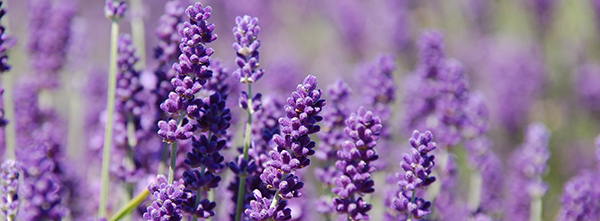
Before Europeans determined to explore, colonize, & claim the vast continents of North & South America, Native American healers used this plant as a remedy for insomnia, anxiety, depression, headache, and fatigue.
Tuesday, March 31, 2020
Sunday, March 29, 2020
Native American Medicinal Plant - Cattail
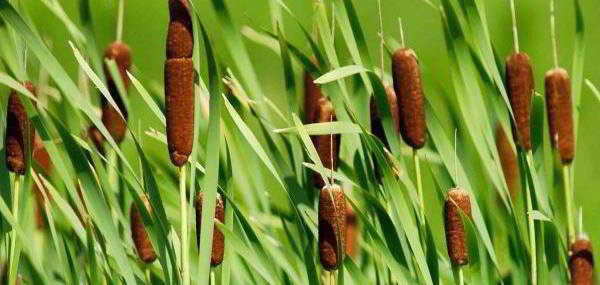
This is one of the most famous survival plants the indigenous population used for food; but before Europeans determined to explore, colonize, & claim the vast continents of North & South America, Native American healers also used it as a preventative medicine. Because it’s an easily digestible food, it’s helpful for recovering from illness.

Friday, March 27, 2020
Native American Medicinal Plant - Black Gum Bark
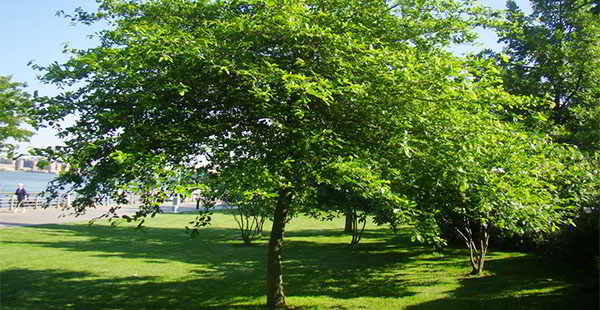
Before Europeans determined to explore, colonize, & claim the vast continents of North & South America, Cherokee healers used to make a mild tea from the twigs and the black gum bark to relieve chest pains.
Wednesday, March 25, 2020
Native American Medicinal Plant - Red Clover
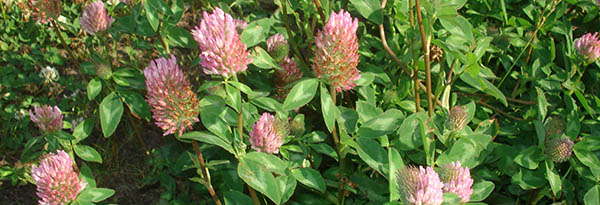
Before Europeans determined to explore, colonize, & claim the vast continents of North & South America, this plant had been used by Native American healers for treating inflammation and respiratory conditions.
Monday, March 23, 2020
Native American Medicinal Plant - Mint
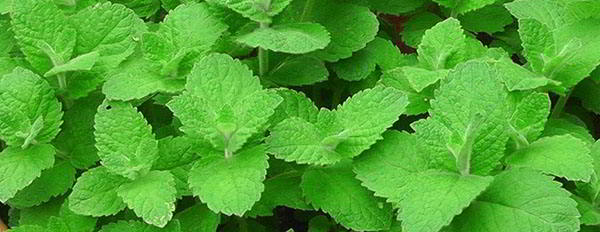
Cherokee healers used to make a mint tea to soothe digestion problems and help an upset stomach. Before Europeans determined to explore, colonize, & claim the vast continents of North & South America, the Native American medicine men also made a salve from the leaves to relieve itching skin and rashes.
Saturday, March 21, 2020
Native American Medicinal Plant - Rosemary
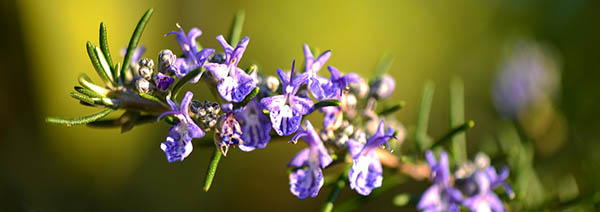
Before Europeans determined to explore, colonize, & claim the vast continents of North & South America, Native American tribes considered this plant sacred. The healers used it mostly as an analgesic for alleviating sore joints.
Thursday, March 19, 2020
Native American Medicinal Plant - Blackberry

Before Europeans determined to explore, colonize, & claim the vast continents of North & South America, the Cherokee used this plant for treating an upset stomach. They used blackberry tea for curing diarrhea and soothing swollen tissues and joints. To soothe bleeding gums, they used to chew the leaves.
Tuesday, March 17, 2020
Native American Medicinal Plant - Sumac
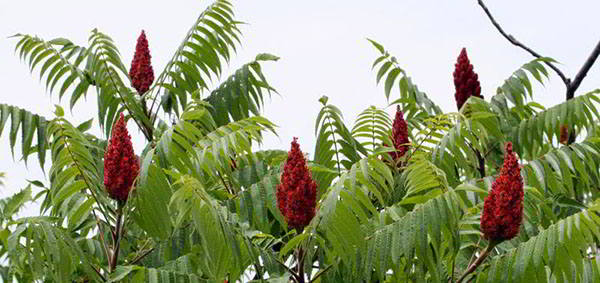
Before Europeans determined to explore, colonize, & claim the vast continents of North & South America, Native American healers knew that this plant can be used for multiple medicinal remedies, but it is one of the only plants that they used in treating eye problems. A decoction from sumac was used as a gargle to relieve sore throats or taken as a remedy for diarrhea. The leaves and berries were combined in tea to reduce fever or made into a poultice to soothe poison ivy.
Sunday, March 15, 2020
Native American Medicinal Plant - Yarrow
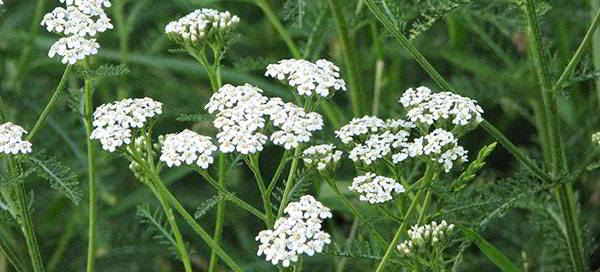
This fragrant, flowering plant, Achillea millefolium, has been used since Ancient Greece began using to stop excess bleeding. Before Europeans determined to explore, colonize, & claim the vast continents of North & South America, Native American peoples applied this on open wounds and cuts as a poultice made from the leaves to help clot the blood. They also combined fresh yarrow juice with water to help an upset stomach and for intestinal disorders.
Friday, March 13, 2020
Native American Medicinal Plant - Sage
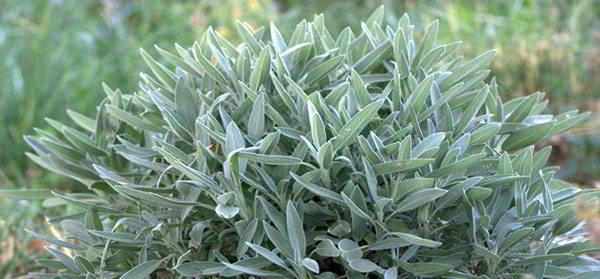
Sage is commonly used as a spice, but before Europeans determined to explore, colonize, & claim the vast continents of North & South America, it was a sacred plant for many indigenous Native American tribes; as it was thought to have effective purifying energies and to cleanse the body of negative energies. As a remedy, it was used for treating medical conditions like abdominal cramps, spasms, cuts, bruises, colds, and flu.
Wednesday, March 11, 2020
Native American Medicinal Plant - Saw Palmetto
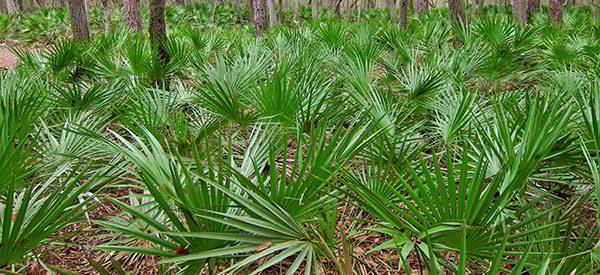
Before Europeans determined to explore, colonize, & claim the vast continents of North & South America, Native American tribes of Florida, such as the Seminoles, used the plant for food, but medicine men used it as a natural remedy for abdominal pain. It also helps digestion, reduces inflammation, and stimulates appetite.
Monday, March 9, 2020
Native American Medicinal Plant - Wild Rose
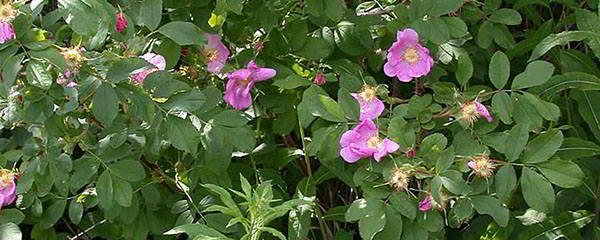
Before Europeans determined to explore, colonize, & claim the vast continents of North & South America, the Native American healers used this plant as a preventive and a cure for a mild common cold. The tea reportedly stimulates the bladder and kidneys and is a mild diuretic. A petal infusion was used for a sore throat.
Monday, January 13, 2020
Shoshone Village by Albert Bierstadt (German-born American painter, 1830-1902)

Matthew Biagell explains in his book Albert Bierstadt that,"Athough Bierstadt made probing studies of individual Indians during his travels in the West, he usually generalized their appearances & activities in his paintings. He placed them, as he placed European peasants in earlier works, in the middle distance, so that we witness their presence in a landscape setting rather than focus on their movements." Many of his landscapes including Native Americans are the western equivalent of his European generalized landscapes & reveals Bierstadt's consistent attitude toward subject matter regardless of its locale human subjects are engaged in seemingly unrelated activities. His paintings, bathed in a golden glow, often suggest nostalgia for a previous age when Native Americans were thought to have lived harmoniously with nature. Here they are not wily, wicked, or predatory, but are engaged instead in peaceful domestic industry. Works such as this are obviously part of the broad western European tradition of Arcadian scenes, but in its American version the tradition assumes a particular complexity & ambivalence. His painting including Natives often portray the nobility of the Indians before their contact with Europeans & subsequent debasement. Paintings displaying this attitude undoubtedly provided the public with the images it wanted to see, especially during the years Indians were systematically being driven from their lands. Suchromanticized paintings might also be considered retardataire; the Indian, noble or otherwise, no longer engaged many serious 19C writers after the 1850s, & precise anthropological & linguistic analyses of Indian tribes were already being included in the Pacific railroad reports by that time.
Albert Bierstadt (German-born American painter, 1830-1902) was best known for these lavish, sweeping landscapes of the American West. To paint the scenes, Bierstadt joined several journeys of the Westward Expansion. Bierstadt, was born in Solingen, Germany. He was still a toddler, when his family moved from Germany to New Bedford in Massachusetts. In 1853, he returned to Germany to study in Dusseldorf, where he refined his technical abilities by painting Alpine landscapes. After he returned to America in 1857, he joined an overland survey expedition traveling westward across the country. Along the route, he took countless photographs & made sketches & returned East to paint from them. He exhibited at the Boston Athenaeum from 1859-1864, at the Brooklyn Art Association from 1861-1879, & at the Boston Art Club from 1873-1880. A member of the National Academy of Design from 1860-1902, he kept a studio in the 10th Street Studio Building, New York City from 1861-1879. He was a member of the Century Association from 1862-1902, when he died.
Thursday, January 9, 2020
Chimney Rock Village - Oglala Souix by Albert Bierstadt (German-born American painter, 1830-1902)

The Sioux ( Dakota), are groups of Native American tribes & First Nations peoples in North America. The term can refer to any ethnic group within the Great Sioux Nation or to any of the nation's many language dialects.
The Dakota are first recorded to have resided at the source of the Mississippi River & the Great Lakes during the seventeenth century. They were dispersed west in 1659 due to warfare with the Iroquois. By 1700 the Dakota Sioux were living in Wisconsin & Minnesota, at this time they exterminated the Wicosawan, another Siouan people in 1710. A split of branch known as the Lakota had migrated to present-day South Dakota. Late in the 17th century, the Dakota entered into an alliance with French merchants. The French were trying to gain advantage in the struggle for the North American fur trade against the English, who had recently established the Hudson's Bay Company.
The first recorded encounter between the Sioux & the French occurred when Radisson & Groseilliers reached what is now Wisconsin during the winter of 1659–60. Later visiting French traders & missionaries included Claude-Jean Allouez, Daniel Greysolon Duluth, & Pierre-Charles Le Sueur who wintered with Dakota bands in early 1700. In 1736 a group of Sioux killed Jean Baptiste de La Vérendrye & twenty other men on an island in Lake of the Woods. However, trade with the French continued until the French gave up North America in 1763.
The Pawnee Indians had a long tradition of living in present-day Nebraska. Their first land cession to the United States took place in 1833 when they sold land south of the Platte River. The Massacre Canyon battlefield near Republican River is located within this area. Forty years & two land cessions later, the tribe lived in a small reservation on old Pawnee land, present-day Nance County. The Pawnees had kept a right to hunt buffalo on their vast, ancient range between the Loup, Platte & Republican rivers in Nebraska & south into northern Kansas, now territory of the United States. They had suffered continual attacks by the Lakota that increased violently in the early 1840s. The Lakota lived north of the Pawnee. In 1868 they had entered into a treaty with the United States & agreed to live in the Great Sioux Reservation in present-day South Dakota. By Article 11 they (also) received a right to hunt along the Republican, almost 200 miles south of the reservation. Both the Pawnee & the Lakota complained regularly over attacks by the other tribe. An attempt to make peace in 1871 with the United States as intermediary came to nothing.
The Massacre Canyon battle took place in Nebraska on August 5, 1873 near the Republican River. It was one of the last hostilities between the Pawnee & the Lakota & the last battle/massacre between Great Plains Indians in North America. The massacre occurred when a large Oglala/Brulé Sioux war party of over 1,500 warriors led by Two Strike, Little Wound, & Spotted Tail attacked a band of Pawnee during their summer buffalo hunt. In the ensuing rout more than 75–100 Pawnees were killed, men with mostly women & children, the victims suffering mutilation & some set on fire.
The Pawnee were traveling along the west bank of the canyon, which runs south to the Republican River, when they were attacked. "A census taken at the Pawnee Agency in September, according [to] Agent Burges "71 Pawnee warriors were killed, & 102 women & children killed", the victims brutally mutilated & scalped & others even set on fire" although Trail Agent John Williamson's account states 156 Pawnee died. It is likely the death toll would have been higher, for Williamson noted ". . . a company of United States cavalry emerge[d] from the timber. When the Sioux saw the soldiers approaching they beat a hasty retreat, although "Recently discovered military documents disproved the old theory" per the "Massacre Canyon Monument" article. This massacre is by some considered one of the factors that led to the Pawnees' decision to move to a reservation in Indian Territory in what is today Oklahoma. The Pawnee disagree.
By 1862, shortly after a failed crop the year before & a winter starvation, the federal payment was late. The local traders would not issue any more credit to the Santee & one trader, Andrew Myrick, went so far as to say, "If they're hungry, let them eat grass." On August 17, 1862 the Dakota War began when a few Santee men murdered a white farmer & most of his family. They inspired further attacks on white settlements along the Minnesota River. The Santee attacked the trading post. Later, settlers found Myrick among the dead with his mouth stuffed full of grass.
On November 5, 1862 in Minnesota, in courts-martial, 303 Santee Sioux were found guilty of rape & murder of hundreds of American settlers. They were sentenced to be hanged. No attorneys or witnesses were allowed as a defense for the accused, & many were convicted in less than five minutes of court time with the judge. President Abraham Lincoln commuted the death sentences of 284 of the warriors, while signing off on the hanging of 38 Santee men on December 26, 1862 in Mankato, Minnesota. It was the largest mass-execution in U.S. history, on US soil.
Afterwards, the US suspended treaty annuities to the Dakota for four years & awarded the money to the white victims & their families. The men remanded by order of President Lincoln were sent to a prison in Iowa, where more than half died.
During & after the revolt, many Santee & their kin fled Minnesota & Eastern Dakota to Canada, or settled in the James River Valley in a short-lived reservation before being forced to move to Crow Creek Reservation on the east bank of the Missouri. A few joined the Yanktonai & moved further west to join with the Lakota bands to continue their struggle against the United States military.
Others were able to remain in Minnesota & the east, in small reservations existing into the 21st century, including Sisseton-Wahpeton, Flandreau, & Devils Lake (Spirit Lake or Fort Totten) Reservations in the Dakotas. Some ended up in Nebraska, where the Santee Sioux Reservation today has a reservation on the south bank of the Missouri.
Those who fled to Canada now have descendants residing on nine small Dakota Reserves, five of which are located in Manitoba (Sioux Valley, Long Plain, Dakota Tipi, Birdtail Creek, & Oak Lake [Pipestone]) & the remaining four (Standing Buffalo, Moose Woods [White Cap], Round Plain [Wahpeton], & Wood Mountain) in Saskatchewan.
Red Cloud's War (also referred to as the Bozeman War) was an armed conflict between the Lakota & the United States Army in the Wyoming Territory & the Montana Territory from 1866 to 1868. The war was fought over control of the Powder River Country in north central Wyoming.
The war is named after Red Cloud, a prominent Sioux chief who led the war against the United States following encroachment into the area by the U.S. military. The war ended with the Treaty of Fort Laramie. The Sioux victory in the war led to their temporarily preserving their control of the Powder River country.
The Great Sioux War of 1876, also known as the Black Hills War, was a series of battles & negotiations which occurred in 1876 & 1877 between the Lakota Sioux, Northern Cheyenne, & the United States. The cause of the war was the desire of the U.S. government to obtain ownership of the Black Hills. Gold had been discovered in the Black Hills, settlers began to encroach onto Native American lands, & the Sioux & Cheyenne refused to cede ownership to the U.S. Traditionally, the United States military & historians place the Lakota at the center of the story, especially given their numbers, but some Indians believe the Cheyenne were the primary target of the U.S. campaign.
The earliest engagement was the Battle of Powder River, & the final battle was the Wolf Mountain. Included are the Battle of the Rosebud, Battle of Warbonnet Creek, Battle of Slim Buttes, Battle of Cedar Creek, & the Dull Knife Fight.
Among the many battles & skirmishes of the war was the Battle of the Little Bighorn, often known as Custer's Last Stand, the most storied of the many encounters between the U.S. army & mounted Plains Indians. The Battle of the Little Bighorn, known to the Lakota & other Plains Indians as the Battle of the Greasy Grass & also commonly referred to as Custer's Last Stand, was an armed engagement between combined forces of the Lakota, Northern Cheyenne, & Arapaho tribes & the 7th Cavalry Regiment of the United States Army. The battle, which resulted in the defeat of US forces, was the most significant action of the Great Sioux War of 1876. It took place on June 25–26, 1876, along the Little Bighorn River in the Crow Indian Reservation in southeastern Montana Territory.
The fight was an overwhelming victory for the Lakota, Northern Cheyenne, & Arapaho, who were led by several major war leaders, including Crazy Horse & Chief Gall, & had been inspired by the visions of Sitting Bull (Tȟatȟáŋka Íyotake). The US 7th Cavalry, a force of 700 men, suffered a major defeat while under the command of Lieutenant Colonel George Armstrong Custer (formerly a brevetted major general during the American Civil War). Five of the 7th Cavalry's twelve companies were annihilated & Custer was killed, as were two of his brothers, a nephew & a brother-in-law. The total US casualty count included 268 dead & 55 severely wounded (six died later from their wounds), including four Crow Indian scouts & at least two Arikara Indian scouts. The Little Bighorn Battlefield National Monument honors those who fought on both sides.
That Indian victory notwithstanding, the U.S. leveraged national resources to force the Indians to surrender, primarily by attacking & destroying their encampments & property. The Great Sioux War took place under the presidencies of Ulysses S. Grant & Rutherford B. Hayes. The Agreement of 1877 (19 Stat. 254, enacted February 28, 1877) officially annexed Sioux land & permanently established Indian reservations.
The massacre at Wounded Knee Creek was the last major armed conflict between the Lakota & the United States. It was described as a "massacre" by General Nelson A. Miles in a letter to the Commissioner of Indian Affairs.
On December 29, 1890, five hundred troops of the 7th Cavalry Regiment, supported by four Hotchkiss guns (a lightweight artillery piece capable of rapid fire), surrounded an encampment of the Lakota bands of the Miniconjou & Hunkpapa with orders to escort them to the railroad for transport to Omaha, Nebraska.
By the time it was over, 25 troopers & more than 150 Lakota Sioux lay dead, including men, women, & children. It remains unknown which side was responsible for the first shot; some of the soldiers are believed to have been the victims of "friendly fire" because the shooting took place at point-blank range in chaotic conditions. Around 150 Lakota are believed to have fled the chaos, many of whom may have died from hypothermia.
Matthew Biagell explains in his book Albert Bierstadt that,"Athough Bierstadt made probing studies of individual Indians during his travels in the West, he usually generalized their appearances & activities in his paintings. He placed them, as he placed European peasants in earlier works, in the middle distance, so that we witness their presence in a landscape setting rather than focus on their movements." Many of his landscapes including Native Americans are the western equivalent of his European generalized landscapes & reveals Bierstadt's consistent attitude toward subject matter regardless of its locale human subjects are engaged in seemingly unrelated activities. His paintings, bathed in a golden glow, often suggest nostalgia for a previous age when Native Americans were thought to have lived harmoniously with nature. Here they are not wily, wicked, or predatory, but are engaged instead in peaceful domestic industry. Works such as this are obviously part of the broad western European tradition of Arcadian scenes, but in its American version the tradition assumes a particular complexity & ambivalence. His painting including Natives often portray the nobility of the Indians before their contact with Europeans & subsequent debasement. Paintings displaying this attitude undoubtedly provided the public with the images it wanted to see, especially during the years Indians were systematically being driven from their lands. Suchromanticized paintings might also be considered retardataire; the Indian, noble or otherwise, no longer engaged many serious 19C writers after the 1850s, & precise anthropological & linguistic analyses of Indian tribes were already being included in the Pacific railroad reports by that time.
Albert Bierstadt (German-born American painter, 1830-1902) was best known for these lavish, sweeping landscapes of the American West. To paint the scenes, Bierstadt joined several journeys of the Westward Expansion. Bierstadt, was born in Solingen, Germany. He was still a toddler, when his family moved from Germany to New Bedford in Massachusetts. In 1853, he returned to Germany to study in Dusseldorf, where he refined his technical abilities by painting Alpine landscapes. After he returned to America in 1857, he joined an overland survey expedition traveling westward across the country. Along the route, he took countless photographs & made sketches & returned East to paint from them. He exhibited at the Boston Athenaeum from 1859-1864, at the Brooklyn Art Association from 1861-1879, & at the Boston Art Club from 1873-1880. A member of the National Academy of Design from 1860-1902, he kept a studio in the 10th Street Studio Building, New York City from 1861-1879. He was a member of the Century Association from 1862-1902, when he died.
Sunday, January 5, 2020
Indian Camp by Albert Bierstadt (German-born American painter, 1830-1902)

Matthew Biagell explains in his book Albert Bierstadt that,"Athough Bierstadt made probing studies of individual Indians during his travels in the West, he usually generalized their appearances & activities in his paintings. He placed them, as he placed European peasants in earlier works, in the middle distance, so that we witness their presence in a landscape setting rather than focus on their movements." Many of his landscapes including Native Americans are the western equivalent of his European generalized landscapes & reveals Bierstadt's consistent attitude toward subject matter regardless of its locale human subjects are engaged in seemingly unrelated activities. His paintings, bathed in a golden glow, often suggest nostalgia for a previous age when Native Americans were thought to have lived harmoniously with nature. Here they are not wily, wicked, or predatory, but are engaged instead in peaceful domestic industry. Works such as this are obviously part of the broad western European tradition of Arcadian scenes, but in its American version the tradition assumes a particular complexity & ambivalence. His painting including Natives often portray the nobility of the Indians before their contact with Europeans & subsequent debasement. Paintings displaying this attitude undoubtedly provided the public with the images it wanted to see, especially during the years Indians were systematically being driven from their lands. Suchromanticized paintings might also be considered retardataire; the Indian, noble or otherwise, no longer engaged many serious 19C writers after the 1850s, & precise anthropological & linguistic analyses of Indian tribes were already being included in the Pacific railroad reports by that time.
Albert Bierstadt (German-born American painter, 1830-1902) was best known for these lavish, sweeping landscapes of the American West. To paint the scenes, Bierstadt joined several journeys of the Westward Expansion. Bierstadt, was born in Solingen, Germany. He was still a toddler, when his family moved from Germany to New Bedford in Massachusetts. In 1853, he returned to Germany to study in Dusseldorf, where he refined his technical abilities by painting Alpine landscapes. After he returned to America in 1857, he joined an overland survey expedition traveling westward across the country. Along the route, he took countless photographs & made sketches & returned East to paint from them. He exhibited at the Boston Athenaeum from 1859-1864, at the Brooklyn Art Association from 1861-1879, & at the Boston Art Club from 1873-1880. A member of the National Academy of Design from 1860-1902, he kept a studio in the 10th Street Studio Building, New York City from 1861-1879. He was a member of the Century Association from 1862-1902, when he died.
Friday, January 3, 2020
Indigenous American Women by Alfred Jacob Miller (1810-1874) - Indian Girl Reposing
+Indian+Girl+Reposing.jpg)
Indian Girl Reposing
"Before they are 16 years of age, these girls may be said to have their hey-day, and even if they become the wives or mates of Trappers, are comparatively happy, for they generally indulge them to their hearts' content; should they become however the squaws of Indians, their lives are subjected to the caprices of a tyrant too often, whose ill treatment is the rule and kindness their exception. Nothing so strikingly distinguishes civilized from savage life as the treatment of women. It is in every particular in favor of the former. The scene in the sketch is a sunset view on the prairie,- a Shoshonee girl reclined on a Buffalo robe near a stream, and some lodges and Indians in the distance." A.J. Miller, extracted from "The West of Alfred Jacob Miller" (1837).
In July of 1858, Baltimore art collector William T. Walters commissioned 200 watercolors at $12 apiece from Baltimore-born artist Alfred Jacob Miller. These paintings were each accompanied by a descriptive text, & were delivered in installments over the next 21 months & ultimately bound in 3 albums. These albums included transcriptions of field-sketches drawn during Miller's 1837 expedition to the annual fur-trader's rendezvous in the Green River Valley (now western Wyoming). These watercolors are a unique record of the closing years of the western fur trade. The Walters Art Museum, Baltimore, Maryland.
Monday, December 30, 2019
Wandering Indians near Fort Laramie (1861) by Albert Bierstadt (German-born American painter, 1830-1902)

Matthew Biagell explains in his book Albert Bierstadt that,"Athough Bierstadt made probing studies of individual Indians during his travels in the West, he usually generalized their appearances & activities in his paintings. He placed them, as he placed European peasants in earlier works, in the middle distance, so that we witness their presence in a landscape setting rather than focus on their movements." Many of his landscapes including Native Americans are the western equivalent of his European generalized landscapes & reveals Bierstadt's consistent attitude toward subject matter regardless of its locale human subjects are engaged in seemingly unrelated activities. His paintings, bathed in a golden glow, often suggest nostalgia for a previous age when Native Americans were thought to have lived harmoniously with nature. Here they are not wily, wicked, or predatory, but are engaged instead in peaceful domestic industry. Works such as this are obviously part of the broad western European tradition of Arcadian scenes, but in its American version the tradition assumes a particular complexity & ambivalence. His painting including Natives often portray the nobility of the Indians before their contact with Europeans & subsequent debasement. Paintings displaying this attitude undoubtedly provided the public with the images it wanted to see, especially during the years Indians were systematically being driven from their lands. Suchromanticized paintings might also be considered retardataire; the Indian, noble or otherwise, no longer engaged many serious 19C writers after the 1850s, & precise anthropological & linguistic analyses of Indian tribes were already being included in the Pacific railroad reports by that time.
Albert Bierstadt (German-born American painter, 1830-1902) was best known for these lavish, sweeping landscapes of the American West. To paint the scenes, Bierstadt joined several journeys of the Westward Expansion. Bierstadt, was born in Solingen, Germany. He was still a toddler, when his family moved from Germany to New Bedford in Massachusetts. In 1853, he returned to Germany to study in Dusseldorf, where he refined his technical abilities by painting Alpine landscapes. After he returned to America in 1857, he joined an overland survey expedition traveling westward across the country. Along the route, he took countless photographs & made sketches & returned East to paint from them. He exhibited at the Boston Athenaeum from 1859-1864, at the Brooklyn Art Association from 1861-1879, & at the Boston Art Club from 1873-1880. A member of the National Academy of Design from 1860-1902, he kept a studio in the 10th Street Studio Building, New York City from 1861-1879. He was a member of the Century Association from 1862-1902, when he died.
Tuesday, December 24, 2019
Indian Camp by Albert Bierstadt (German-born American painter, 1830-1902)

Matthew Biagell explains in his book Albert Bierstadt that,"Athough Bierstadt made probing studies of individual Indians during his travels in the West, he usually generalized their appearances & activities in his paintings. He placed them, as he placed European peasants in earlier works, in the middle distance, so that we witness their presence in a landscape setting rather than focus on their movements." Many of his landscapes including Native Americans are the western equivalent of his European generalized landscapes & reveals Bierstadt's consistent attitude toward subject matter regardless of its locale human subjects are engaged in seemingly unrelated activities. His paintings, bathed in a golden glow, often suggest nostalgia for a previous age when Native Americans were thought to have lived harmoniously with nature. Here they are not wily, wicked, or predatory, but are engaged instead in peaceful domestic industry. Works such as this are obviously part of the broad western European tradition of Arcadian scenes, but in its American version the tradition assumes a particular complexity & ambivalence. His painting including Natives often portray the nobility of the Indians before their contact with Europeans & subsequent debasement. Paintings displaying this attitude undoubtedly provided the public with the images it wanted to see, especially during the years Indians were systematically being driven from their lands. Suchromanticized paintings might also be considered retardataire; the Indian, noble or otherwise, no longer engaged many serious 19C writers after the 1850s, & precise anthropological & linguistic analyses of Indian tribes were already being included in the Pacific railroad reports by that time.
Albert Bierstadt (German-born American painter, 1830-1902) was best known for these lavish, sweeping landscapes of the American West. To paint the scenes, Bierstadt joined several journeys of the Westward Expansion. Bierstadt, was born in Solingen, Germany. He was still a toddler, when his family moved from Germany to New Bedford in Massachusetts. In 1853, he returned to Germany to study in Dusseldorf, where he refined his technical abilities by painting Alpine landscapes. After he returned to America in 1857, he joined an overland survey expedition traveling westward across the country. Along the route, he took countless photographs & made sketches & returned East to paint from them. He exhibited at the Boston Athenaeum from 1859-1864, at the Brooklyn Art Association from 1861-1879, & at the Boston Art Club from 1873-1880. A member of the National Academy of Design from 1860-1902, he kept a studio in the 10th Street Studio Building, New York City from 1861-1879. He was a member of the Century Association from 1862-1902, when he died.
Friday, December 20, 2019
Camping Indians in Mariposa, Yosemite Valley, California by Albert Bierstadt (German-born American painter, 1830-1902)

Albert Bierstadt (German-born American painter, 1830-1902) Camp Indians in Mariposa, Yosemite Valley, California (c 1872)
Matthew Biagell explains in his book Albert Bierstadt that,"Athough Bierstadt made probing studies of individual Indians during his travels in the West, he usually generalized their appearances & activities in his paintings. He placed them, as he placed European peasants in earlier works, in the middle distance, so that we witness their presence in a landscape setting rather than focus on their movements." Many of his landscapes including Native Americans are the western equivalent of his European generalized landscapes & reveals Bierstadt's consistent attitude toward subject matter regardless of its locale human subjects are engaged in seemingly unrelated activities. His paintings, bathed in a golden glow, often suggest nostalgia for a previous age when Native Americans were thought to have lived harmoniously with nature. Here they are not wily, wicked, or predatory, but are engaged instead in peaceful domestic industry. Works such as this are obviously part of the broad western European tradition of Arcadian scenes, but in its American version the tradition assumes a particular complexity & ambivalence. His painting including Natives often portray the nobility of the Indians before their contact with Europeans & subsequent debasement. Paintings displaying this attitude undoubtedly provided the public with the images it wanted to see, especially during the years Indians were systematically being driven from their lands. Suchromanticized paintings might also be considered retardataire; the Indian, noble or otherwise, no longer engaged many serious 19C writers after the 1850s, & precise anthropological & linguistic analyses of Indian tribes were already being included in the Pacific railroad reports by that time.
Albert Bierstadt (German-born American painter, 1830-1902) was best known for these lavish, sweeping landscapes of the American West. To paint the scenes, Bierstadt joined several journeys of the Westward Expansion. Bierstadt, was born in Solingen, Germany. He was still a toddler, when his family moved from Germany to New Bedford in Massachusetts. In 1853, he returned to Germany to study in Dusseldorf, where he refined his technical abilities by painting Alpine landscapes. After he returned to America in 1857, he joined an overland survey expedition traveling westward across the country. Along the route, he took countless photographs & made sketches & returned East to paint from them. He exhibited at the Boston Athenaeum from 1859-1864, at the Brooklyn Art Association from 1861-1879, & at the Boston Art Club from 1873-1880. A member of the National Academy of Design from 1860-1902, he kept a studio in the 10th Street Studio Building, New York City from 1861-1879. He was a member of the Century Association from 1862-1902, when he died.
Wednesday, December 18, 2019
Indians in the Rocky Mountains, Lander Peak 1863 by Albert Bierstadt (German-born American painter, 1830-1902)

Matthew Biagell explains in his book Albert Bierstadt that,"Athough Bierstadt made probing studies of individual Indians during his travels in the West, he usually generalized their appearances & activities in his paintings. He placed them, as he placed European peasants in earlier works, in the middle distance, so that we witness their presence in a landscape setting rather than focus on their movements." Many of his landscapes including Native Americans are the western equivalent of his European generalized landscapes & reveals Bierstadt's consistent attitude toward subject matter regardless of its locale human subjects are engaged in seemingly unrelated activities. His paintings, bathed in a golden glow, often suggest nostalgia for a previous age when Native Americans were thought to have lived harmoniously with nature. Here they are not wily, wicked, or predatory, but are engaged instead in peaceful domestic industry. Works such as this are obviously part of the broad western European tradition of Arcadian scenes, but in its American version the tradition assumes a particular complexity & ambivalence. His painting including Natives often portray the nobility of the Indians before their contact with Europeans & subsequent debasement. Paintings displaying this attitude undoubtedly provided the public with the images it wanted to see, especially during the years Indians were systematically being driven from their lands. Suchromanticized paintings might also be considered retardataire; the Indian, noble or otherwise, no longer engaged many serious 19C writers after the 1850s, & precise anthropological & linguistic analyses of Indian tribes were already being included in the Pacific railroad reports by that time.
Albert Bierstadt (German-born American painter, 1830-1902) was best known for these lavish, sweeping landscapes of the American West. To paint the scenes, Bierstadt joined several journeys of the Westward Expansion. Bierstadt, was born in Solingen, Germany. He was still a toddler, when his family moved from Germany to New Bedford in Massachusetts. In 1853, he returned to Germany to study in Dusseldorf, where he refined his technical abilities by painting Alpine landscapes. After he returned to America in 1857, he joined an overland survey expedition traveling westward across the country. Along the route, he took countless photographs & made sketches & returned East to paint from them. He exhibited at the Boston Athenaeum from 1859-1864, at the Brooklyn Art Association from 1861-1879, & at the Boston Art Club from 1873-1880. A member of the National Academy of Design from 1860-1902, he kept a studio in the 10th Street Studio Building, New York City from 1861-1879. He was a member of the Century Association from 1862-1902, when he died.
Monday, December 16, 2019
Indian Camp in the Mountains by Albert Bierstadt (German-born American painter, 1830-1902)

Albert Bierstadt (German-born American painter, 1830-1902) Indian camp in the mountains
Matthew Biagell explains in his book Albert Bierstadt that,"Athough Bierstadt made probing studies of individual Indians during his travels in the West, he usually generalized their appearances & activities in his paintings. He placed them, as he placed European peasants in earlier works, in the middle distance, so that we witness their presence in a landscape setting rather than focus on their movements." Many of his landscapes including Native Americans are the western equivalent of his European generalized landscapes & reveals Bierstadt's consistent attitude toward subject matter regardless of its locale human subjects are engaged in seemingly unrelated activities. His paintings, bathed in a golden glow, often suggest nostalgia for a previous age when Native Americans were thought to have lived harmoniously with nature. Here they are not wily, wicked, or predatory, but are engaged instead in peaceful domestic industry. Works such as this are obviously part of the broad western European tradition of Arcadian scenes, but in its American version the tradition assumes a particular complexity & ambivalence. His painting including Natives often portray the nobility of the Indians before their contact with Europeans & subsequent debasement. Paintings displaying this attitude undoubtedly provided the public with the images it wanted to see, especially during the years Indians were systematically being driven from their lands. Suchromanticized paintings might also be considered retardataire; the Indian, noble or otherwise, no longer engaged many serious 19C writers after the 1850s, & precise anthropological & linguistic analyses of Indian tribes were already being included in the Pacific railroad reports by that time.
Albert Bierstadt (German-born American painter, 1830-1902) was best known for these lavish, sweeping landscapes of the American West. To paint the scenes, Bierstadt joined several journeys of the Westward Expansion. Bierstadt, was born in Solingen, Germany. He was still a toddler, when his family moved from Germany to New Bedford in Massachusetts. In 1853, he returned to Germany to study in Dusseldorf, where he refined his technical abilities by painting Alpine landscapes. After he returned to America in 1857, he joined an overland survey expedition traveling westward across the country. Along the route, he took countless photographs & made sketches & returned East to paint from them. He exhibited at the Boston Athenaeum from 1859-1864, at the Brooklyn Art Association from 1861-1879, & at the Boston Art Club from 1873-1880. A member of the National Academy of Design from 1860-1902, he kept a studio in the 10th Street Studio Building, New York City from 1861-1879. He was a member of the Century Association from 1862-1902, when he died.
Thursday, December 12, 2019
Karl Ferdinand Wimar (1828-1862) The Captive Charger

A German-born immigrant to the United States, Charles Wimar(1828-1862) was fascinated by the American frontier. In 1843, he traveled to St. Louis, a fur-trading frontier town at the time. Between 1846 & 1850, he was apprenticed to the artist Leon de Pomarede, & accompanied him on a journey up the Mississippi, to St. Anthony Falls in Minnesota. In 1852, Wimar returned to Germany; & for 4 years, he studied with with Emmanuel Leutze & Josef Fay in Düsseldorf. After his return to the United States, Wimar took several journeys up the Mississippi River and, in 1858, up the Yellowstone River – documented in various sketchbooks. When he died from tuberculosis at the age of 34, he left about 50 paintings. Wimar's paintings, like others of the time, reinforced notions of Native Americans as savage & white settlers as cultivated & divinely ordained - a notion that helped justify white colonization of the West.
Friday, December 6, 2019
Indigenous American Women by Alfred Jacob Miller (1810-1874) - Indian Courtship
+Indian+Courtship.jpg)
Indian Courtship
"The North American Indian carries his wonderful stoicism into every transaction of his life,- even the tender subject of selecting a helpmate does not disturb his tranquility - neither is he affected with the slightest romance in regard to the subject. He brings his presents and casts them at the feet of his bronzed favorite, ostensibly for her; but intended for the optics of the father,- these consist of cloths of brilliant colors, beaver skins, beads, trinkets &c." A.J. Miller, extracted from "The West of Alfred Jacob Miller" (1837).
In July of 1858, Baltimore art collector William T. Walters commissioned 200 watercolors at $12 apiece from Baltimore-born artist Alfred Jacob Miller. These paintings were each accompanied by a descriptive text written by the artist, & were delivered in installments over the next 21 months & ultimately bound in 3 albums. These albums included the field-sketches drawn during Miller's 1837 expedition to the annual fur-trader's rendezvous in the Green River Valley (now western Wyoming). These watercolors offer a unique record of the the lives of those involved in the closing years of the western fur trade & a look at the artist's opinions of both women & Native Americans. The Walters Art Museum, Baltimore, Maryland.
Wednesday, December 4, 2019
The Buffalo Dance by Karl Ferdinand Wimar (1828-1862)

The Buffalo Dance, or Bison Dance, was an annual dance festival of many North American Plains Indians, including the Mandan, Sioux, Cheyenne, Pawnee, & Omaha, among others. The festival traditionally coincided with the return of the buffalo herds, & included a feast & a dance with a number of men wearing buffalo & other animal skins.As the buffalo, or bison, was so central to society, it was important to assure the return of the herd & an abundance of food & resources. It is notable for being one of the earliest films made featuring Native Americans. The Buffalo Dance can also refer to section of larger ceremonies & dances, such as the Sun Dance. In some Native American tribes, societies it was also a dance more associated with curing the ill, calling on the spirit of the buffalo.
A German-born immigrant to the United States, Charles Wimar was fascinated by the American frontier, Wimar focused during this period on images of indiginous American conflicts with settlers, in particular the theme of captivity & abduction. This theme appeared widely in the popular literature & visual arts of the 18C & 19C, in which it was fashionable to mythologize the struggles of the frontier with exotic portrayals of the West & Native Americans. When he died from tuberculosis at the age of 34, he left about 50 paintings. In 1843, he traveled to St. Louis, a fur-trading frontier town at the time. Between 1846 & 1850, he was apprenticed to the artist Leon de Pomarede, & accompanied him on a journey up the Mississippi, to St. Anthony Falls in Minnesota. In 1852, Wimar returned to Germany; & for 4 years, he studied with with Emmanuel Leutze & Josef Fay in Düsseldorf. After his return to the United States, Wimar took several journeys up the Mississippi River and, in 1858, up the Yellowstone River – documented in various sketchbooks. Wimar's paintings, like others of the time, reinforced notions of Native Americans as savage & white settlers as cultivated & divinely ordained - a notion that helped justify white colonization of the West.
Tuesday, November 26, 2019
Paul Kane (1810–1871) Native American Buffalo Camp

The main reason for the bison's near-demise, much like the actual demise of the Passenger Pigeon, was commercial hunting.
Bison skins were used for industrial machine belts, clothing such as robes, & rugs. There was a huge export trade to Europe of bison hides. Old West bison hunting was very often a big commercial enterprise, involving organized teams of one or two professional hunters, backed by a team of skinners, gun cleaners, cartridge reloaders, cooks, wranglers, blacksmiths, security guards, teamsters, & numerous horses & wagons. Men were even employed to recover & recast lead bullets taken from the carcasses. Many of these professional hunters, such as Buffalo Bill Cody, killed over a hundred animals at a single stand & many thousands in their career. One professional hunter killed over 20,000 by his own count. A good hide could bring $3 in Dodge City, Kansas, & a very good one (the heavy winter coat) could sell for $50 in an era when a laborer would be lucky to make a dollar a day.
The hunter would customarily locate the herd in the early morning, & station himself about 100 yards/meters from it, shooting the animals broadside through the lungs. Head shots were not preferred as the soft lead bullets would often flatten & fail to penetrate the skull, especially if mud was matted on the head of the animal. The bison would continue to drop until either the herd sensed danger & stampeded or perhaps a wounded animal attacked another, causing the herd to disperse. If done properly a large number of bison would be felled at one time. Following up were the skinners, who would drive a spike through the nose of each dead animal with a sledgehammer, hook up a horse team, & pull the hide from the carcass. The hides were dressed, prepared, & stacked on the wagons by other members of the organization.
For a decade after 1873, there were several hundred, perhaps over a thousand, such commercial hide hunting outfits harvesting bison at any one time, vastly exceeding the take by American Indians or individual meat hunters. The commercial take arguably was anywhere from 2,000 to 100,000 animals per day depending on the season, though there are no statistics available. It was said that the Big .50s were fired so much that hunters needed at least two rifles to let the barrels cool off; The Fireside Book of Guns reports they were sometimes quenched in the winter snow. Dodge City saw railroad cars sent East filled with stacked hides.
The building of the railroads through Colorado & Kansas split the bison herd in two parts, the southern herd & the northern herd. The last refuge of the southern herd was in the Texas Panhandle.
Sunday, November 24, 2019
Alfred Jacob Miller (1810-1874) - Indian Lodge
%2BIndian%2BLodge.jpg)
Indian Lodge
Along the waters of the upper Platte River, Miller encountered this Indian who had taken advantage of a perculiarly bent tree to put up planks to form a "very tolerable Lodge for his progeny." To the right a female is seated, making moccasins. The head of the household is seated to the left, smoking his calumet, "not trying to solve the difficult problem, the squaring of the circle," Miller supposed. A.J. Miller, extracted from "The West of Alfred Jacob Miller" (1837).
In July of 1858, Baltimore art collector William T. Walters commissioned 200 watercolors at $12 apiece from Baltimore-born artist Alfred Jacob Miller. These paintings were each accompanied by a descriptive text written by the artist, & were delivered in installments over the next 21 months & ultimately bound in 3 albums. These albums included the field-sketches drawn during Miller's 1837 expedition to the annual fur-trader's rendezvous in the Green River Valley (now western Wyoming). These watercolors offer a unique record of the the lives of those involved in the closing years of the western fur trade & a look at the artist's opinions of both women & Native Americans.
The Walters Art Museum, Baltimore, Maryland.
Tuesday, November 12, 2019
Karl Bodmer (1809-1893) paints Missouria, Otoe, and Ponca Indians

From Europe to the Atlantic coast of America to the Pacific coast of America during the 17C-19C, settlers moved West encountering a variety of Indigenous Peoples on their journeys. Karl Bodmer (Swiss Artist, 1809-1893) developed a remarkable talent for drawing & painting while studying with his uncle, painter & engraver Johann Jacob Meyer. After further studies in Paris, he joined his brother on a sketching trip through Germany in 1832 where he met Prince Maximilian zu Weid. Maximilian, known for his natural history research in the coastal forests of Brazil, was searching for a professional artist to accompany him on his expedition to North America. Bodmer signed a contract with Maximilian &, 3 weeks later, they set sail for America. From 1833-1834, the two traveled up the Missouri River, retracing the 1805 journey of Lewis & Clark. On the expedition, Bodmer depicted some of the same characters that George Caitlin had painted just months before. Bodmer was the last artist able to paint the Mandan Indians in North Dakota before the fatal 1837 smallpox epidemic that nearly obliterated the tribe. He also painted portraits of the Sioux, Blackfeet, Hidatsa, & other tribes, while Maximilian conducted studies & made notes on the botany & zoology of the areas. Before the end of the journey, Bodmer had completed 81 paintings, illustrating Maximilians expedition. Each elegant painting displayed extremely detailed & accurate accounts of Indian ceremonies & everyday life. In 1843, Maximilian's lithographs were published in Travels in the Interior of America.
Friday, November 8, 2019
Karl Bodmer (1809-1893) Encounters 19C Native American Traditions

Karl Bodmer (Swiss Artist, 1809-1893) Watercolor of an Assinboin Indian magic pile
From Europe to the Atlantic coast of America to the Pacific coast of America during the 17C-19C, settlers moved West encountering a variety of Indigenous Peoples on their journeys. Karl Bodmer (Swiss Artist, 1809-1893) developed a remarkable talent for drawing & painting while studying with his uncle, painter & engraver Johann Jacob Meyer. After further studies in Paris, he joined his brother on a sketching trip through Germany in 1832 where he met Prince Maximilian zu Weid. Maximilian, known for his natural history research in the coastal forests of Brazil, was searching for a professional artist to accompany him on his expedition to North America. Bodmer signed a contract with Maximilian &, 3 weeks later, they set sail for America.
From 1833-1834, the two traveled up the Missouri River, retracing the 1805 journey of Lewis & Clark. On the expedition, Bodmer depicted some of the same characters that George Caitlin had painted just months before. Bodmer was the last artist able to paint the Mandan Indians in North Dakota before the fatal 1837 smallpox epidemic that nearly obliterated the tribe. He also painted portraits of the Sioux, Blackfeet, Hidatsa, & other tribes, while Maximilian conducted studies & made notes on the botany & zoology of the areas. Before the end of the journey, Bodmer had completed 81 paintings, illustrating Maximilians expedition. Each elegant painting displayed extremely detailed & accurate accounts of Indian ceremonies & everyday life. In 1843, Maximilian's lithographs were published in Travels in the Interior of America.
From 1833-1834, the two traveled up the Missouri River, retracing the 1805 journey of Lewis & Clark. On the expedition, Bodmer depicted some of the same characters that George Caitlin had painted just months before. Bodmer was the last artist able to paint the Mandan Indians in North Dakota before the fatal 1837 smallpox epidemic that nearly obliterated the tribe. He also painted portraits of the Sioux, Blackfeet, Hidatsa, & other tribes, while Maximilian conducted studies & made notes on the botany & zoology of the areas. Before the end of the journey, Bodmer had completed 81 paintings, illustrating Maximilians expedition. Each elegant painting displayed extremely detailed & accurate accounts of Indian ceremonies & everyday life. In 1843, Maximilian's lithographs were published in Travels in the Interior of America.
Wednesday, November 6, 2019
Indian Camp in California by Albert Bierstadt (German-born American painter, 1830-1902)

Albert Bierstadt (German-born American painter, 1830-1902) Indian camp in California (1866)
Matthew Biagell explains in his book Albert Bierstadt that,"Athough Bierstadt made probing studies of individual Indians during his travels in the West, he usually generalized their appearances & activities in his paintings. He placed them, as he placed European peasants in earlier works, in the middle distance, so that we witness their presence in a landscape setting rather than focus on their movements." Many of his landscapes including Native Americans are the western equivalent of his European generalized landscapes & reveals Bierstadt's consistent attitude toward subject matter regardless of its locale human subjects are engaged in seemingly unrelated activities. His paintings, bathed in a golden glow, often suggest nostalgia for a previous age when Native Americans were thought to have lived harmoniously with nature. Here they are not wily, wicked, or predatory, but are engaged instead in peaceful domestic industry. Works such as this are obviously part of the broad western European tradition of Arcadian scenes, but in its American version the tradition assumes a particular complexity & ambivalence. His painting including Natives often portray the nobility of the Indians before their contact with Europeans & subsequent debasement. Paintings displaying this attitude undoubtedly provided the public with the images it wanted to see, especially during the years Indians were systematically being driven from their lands. Suchromanticized paintings might also be considered retardataire; the Indian, noble or otherwise, no longer engaged many serious 19C writers after the 1850s, & precise anthropological & linguistic analyses of Indian tribes were already being included in the Pacific railroad reports by that time.
Albert Bierstadt (German-born American painter, 1830-1902) was best known for these lavish, sweeping landscapes of the American West. To paint the scenes, Bierstadt joined several journeys of the Westward Expansion. Bierstadt, was born in Solingen, Germany. He was still a toddler, when his family moved from Germany to New Bedford in Massachusetts. In 1853, he returned to Germany to study in Dusseldorf, where he refined his technical abilities by painting Alpine landscapes. After he returned to America in 1857, he joined an overland survey expedition traveling westward across the country. Along the route, he took countless photographs & made sketches & returned East to paint from them. He exhibited at the Boston Athenaeum from 1859-1864, at the Brooklyn Art Association from 1861-1879, & at the Boston Art Club from 1873-1880. A member of the National Academy of Design from 1860-1902, he kept a studio in the 10th Street Studio Building, New York City from 1861-1879. He was a member of the Century Association from 1862-1902, when he died.
Tuesday, October 29, 2019
Paul Kane (1810–1871) Return of a War Party in Canada, 1847

Subscribe to:
Posts (Atom)